SSO ID Login – Step-by-Step Guide
Accessing your SSO account requires following a straightforward process. This section provides detailed instructions to help users log in successfully.
Prerequisites for SSO Login
Before attempting to log in, ensure you have:
- An active SSO ID (obtained through registration)
- Your registered password
- Access to your registered mobile number or email (for OTP verification if required)
- A stable internet connection
- An updated web browser
Step-by-Step Login Process
Step 1: Access the Official Portal
Open your preferred web browser and navigate to the official Rajasthan SSO portal. Ensure you are accessing the authentic government website to protect your credentials.
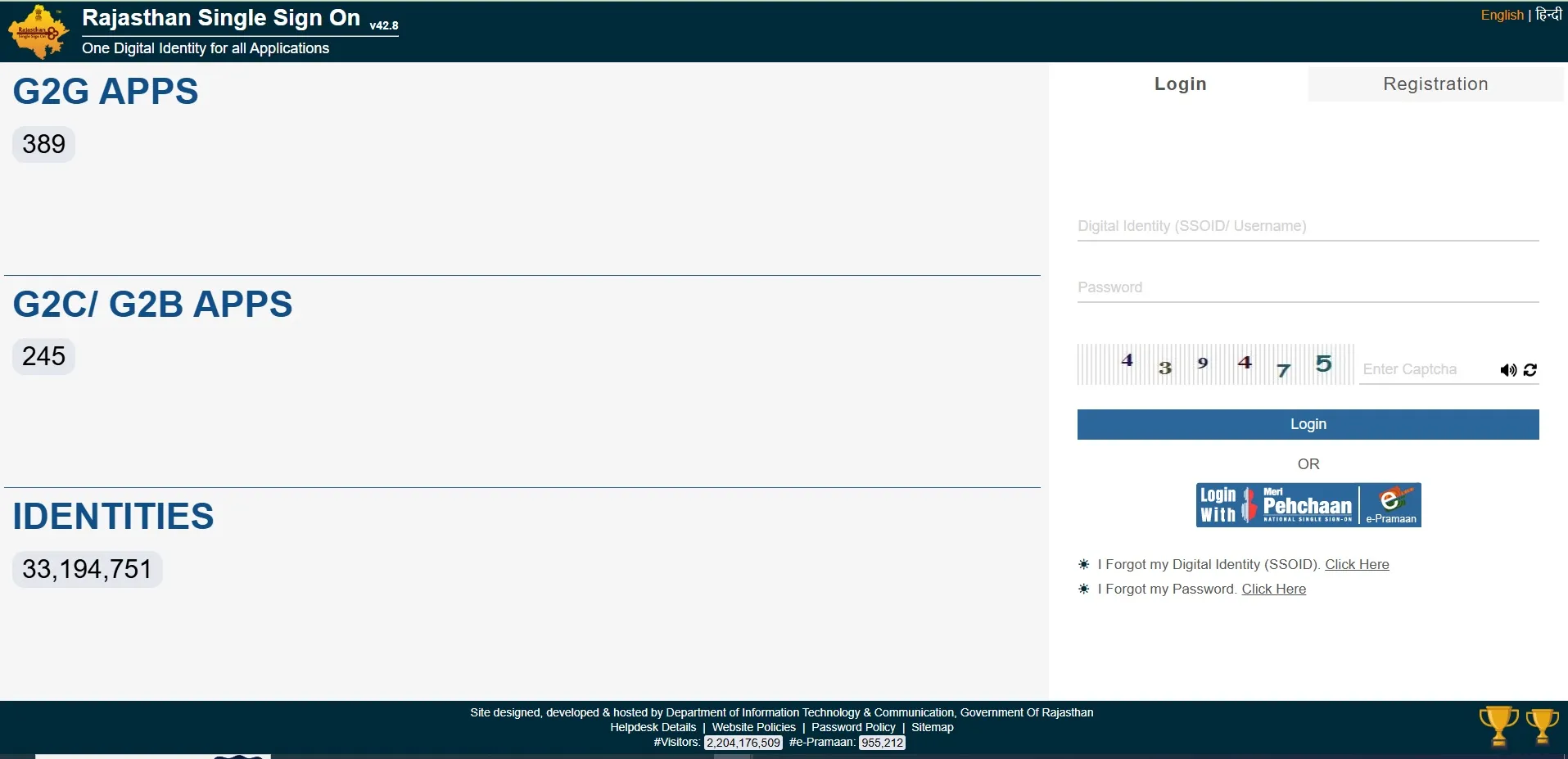
Step 2: Locate the Login Section
On the portal homepage, identify the login section typically positioned prominently on the page. You will find input fields for your SSO ID and password.
Step 3: Enter Your Credentials
Input your registered SSO ID in the designated username field. This could be your:
- Digital identity number
- Registered mobile number
- Registered email address
Enter your password in the password field. Take care to input the correct case-sensitive characters.
Step 4: Complete Security Verification
Many sessions require CAPTCHA verification. Enter the displayed characters accurately in the verification field. If the characters appear unclear, use the refresh option to generate new CAPTCHA.
Step 5: Click Login
After entering all required information, click the login button to proceed. The system will verify your credentials and grant access to your dashboard.
Step 6: Access Your Dashboard
Upon successful authentication, you will be redirected to your SSO dashboard. From here, you can access all linked services and manage your account settings.
Login Tips for Smooth Access
- Browser Compatibility: Use updated versions of Chrome, Firefox, or Edge for optimal performance
- Clear Cache: Periodically clear browser cache to prevent login issues
- Password Security: Never share your login credentials with others
- Secure Networks: Avoid logging in through public or unsecured WiFi networks
- Bookmark Official URL: Save the official portal address to avoid phishing sites
- Session Timeout: Log out properly after completing your tasks
Alternative Login Methods
The SSO portal supports multiple authentication methods:
- Aadhaar-Based Login: Use Aadhaar number with OTP verification
- Bhamashah Login: Access through Bhamashah ID (where applicable)
- Social Login Options: Some integrations support Google or Facebook authentication
- Digital Signature: For advanced users requiring enhanced security
SSO ID Registration – Complete Process
New users must complete the registration process before accessing SSO services. This section explains the registration procedure for different user categories.
General Registration Requirements
All registration types require:
- Valid mobile number for OTP verification
- Active email address
- Personal identification documents
- Basic personal information
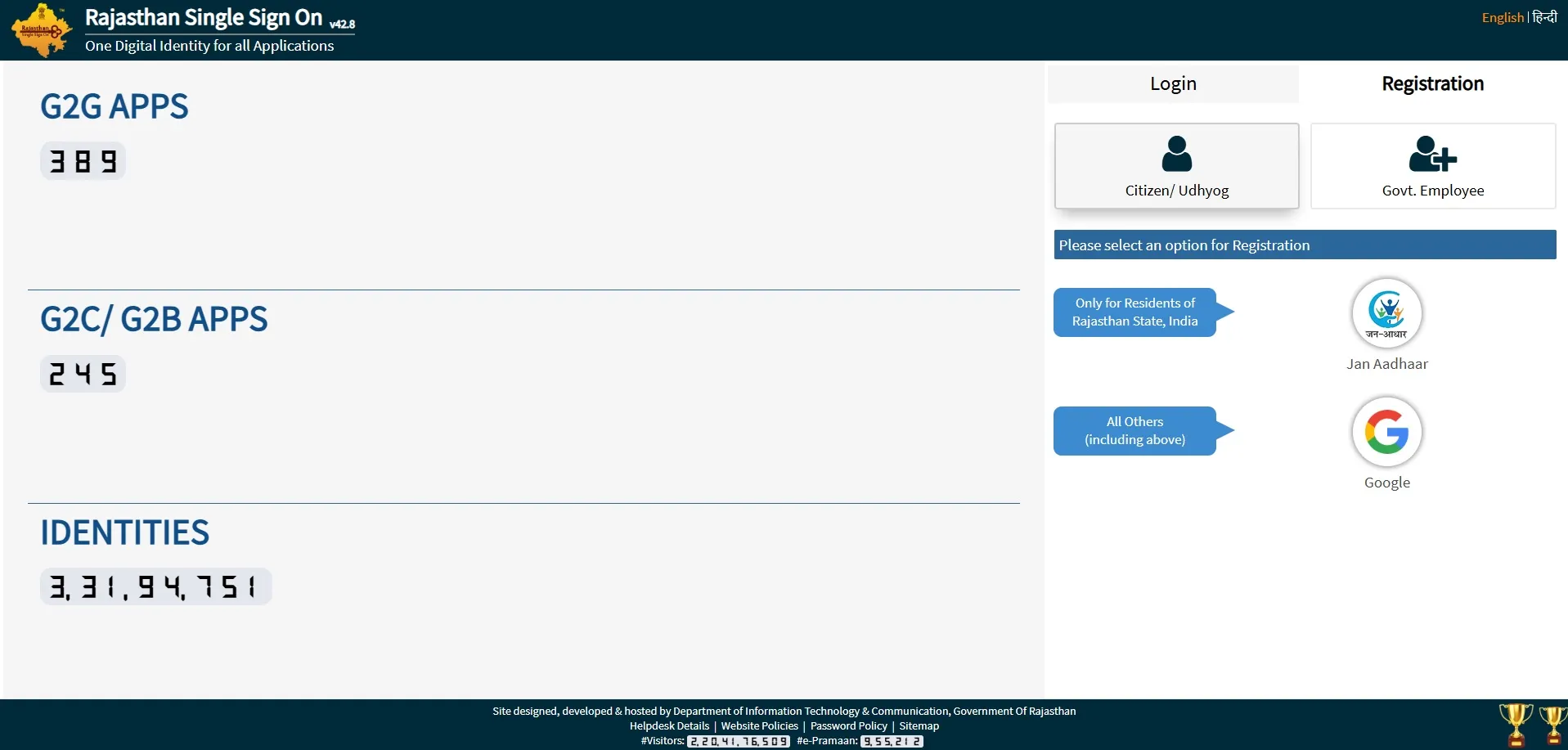
Citizen Registration Process
Citizens of Rajasthan can register using any of the following identity verification methods:
Method 1: Jan Aadhaar Registration
Step 1: Access the SSO portal and select the registration option
Step 2: Choose “Citizen” as your registration category
Step 3: Select “Jan Aadhaar” as your identity verification method
Step 4: Enter your Jan Aadhaar ID or enrollment number
Step 5: Verify through OTP sent to your registered mobile number
Step 6: Create your SSO ID and password following the specified format
Step 7: Complete additional profile information as required
Step 8: Submit registration and note your SSO ID for future reference
Method 2: Bhamashah Registration
Step 1: Select “Bhamashah” option during registration
Step 2: Enter your Bhamashah Reference Number (BRN)
Step 3: Complete OTP verification on registered mobile
Step 4: Set up your SSO credentials
Step 5: Finalize registration by completing the profile
Method 3: Aadhaar Registration
Step 1: Choose “Aadhaar” as verification method
Step 2: Enter your 12-digit Aadhaar number
Step 3: Request OTP on Aadhaar-linked mobile number
Step 4: Enter the received OTP for verification
Step 5: Create login credentials and complete registration
Method 4: Google Account Registration
Step 1: Select Google authentication option
Step 2: Sign in with your existing Google account
Step 3: Authorize the SSO portal to access basic profile information
Step 4: Complete additional required details
Step 5: Link your mobile number for secondary verification
Business (Udhyog) Registration Process
Business entities follow a specialized registration pathway:
Step 1: Select “Udhyog” (Business) category on the registration page
Step 2: Choose your business identification type:
- Business Registration Number (BRN)
- Udyog Aadhaar Number (UAN)
- GSTIN (for GST-registered businesses)
Step 3: Enter the relevant business identification number
Step 4: Verify through OTP on the registered business contact number
Step 5: Provide business details including:
- Business name
- Nature of business
- Registered address
- Authorized representative information
Step 6: Upload required business documents if prompted
Step 7: Create business account credentials
Step 8: Submit for verification (some business registrations require approval)
Government Employee (Sipahi) Registration
State government employees follow the SIPF-based registration process:
Step 1: Select “Govt. Employee” or “SIPF” option
Step 2: Enter your SIPF (State Insurance and Provident Fund) number
Step 3: Provide your employee identification details
Step 4: Verify employment status through the integrated verification system
Step 5: Complete OTP verification on official contact number
Step 6: Create departmental login credentials
Step 7: Registration may require departmental approval before activation
Password Creation Guidelines
When setting up your password, follow these requirements:
- Minimum 8 characters length
- Include at least one uppercase letter
- Include at least one lowercase letter
- Include at least one number
- Include at least one special character (@, #, $, etc.)
- Avoid common words or personal information
- Do not reuse passwords from other accounts
Post-Registration Steps
After successful registration:
- Note down your SSO ID securely
- Verify your email address if not already confirmed
- Complete your profile with accurate information
- Explore available services from your dashboard
- Link additional services as needed
Recover Forgot SSO ID or Password
Account recovery is essential when users forget their login credentials. The SSO portal provides multiple recovery options.
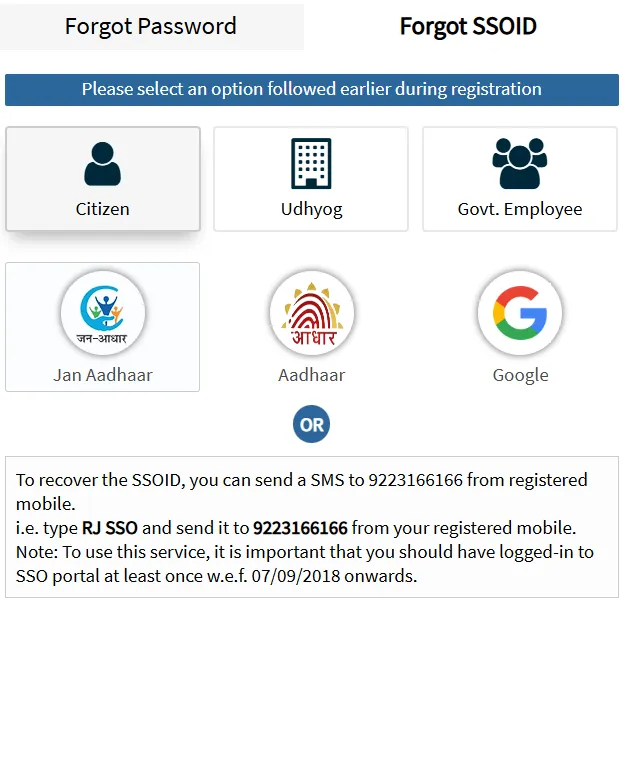
Forgot SSO ID Recovery
If you have forgotten your SSO ID, follow these steps:
Method 1: Mobile Number Recovery
Step 1: Click on “Forgot SSO ID” option on the login page
Step 2: Select mobile number recovery method
Step 3: Enter your registered mobile number
Step 4: Verify ownership through OTP
Step 5: Your SSO ID will be displayed or sent via SMS
Method 2: Email Recovery
Step 1: Select email recovery option
Step 2: Enter your registered email address
Step 3: Check your email for SSO ID information
Step 4: Follow any verification links if required
Forgot Password Recovery
Step 1: Click “Forgot Password” on the login page
Step 2: Enter your SSO ID
Step 3: Choose recovery method (mobile OTP or email)
Step 4: Enter the OTP received on your registered contact
Step 5: Create a new password following the password guidelines
Step 6: Confirm your new password
Step 7: Log in with your updated credentials
Troubleshooting Recovery Issues
Issue: OTP Not Received
- Check if mobile number is correctly entered
- Ensure adequate mobile network coverage
- Wait for a few minutes before requesting resend
- Check if SMS is blocked by your device
Issue: Recovery Email Not Received
- Check spam/junk folder
- Verify the email address is correct
- Ensure email account is active
- Add SSO sender to safe contacts
Issue: Unable to Reset Password
- Ensure you meet password complexity requirements
- Try a different browser
- Clear browser cache and cookies
- Contact support if issues persist
Account Locked Situations
If your account gets locked due to multiple failed login attempts:
- Wait for the specified lockout period (usually 30 minutes)
- Use the password reset option after lockout expires
- Avoid further login attempts during lockout
- Contact helpdesk for immediate assistance if urgent
Services Available on SSO Portal
The Rajasthan SSO Portal integrates numerous government services across various departments. Below is a comprehensive overview of major service categories.
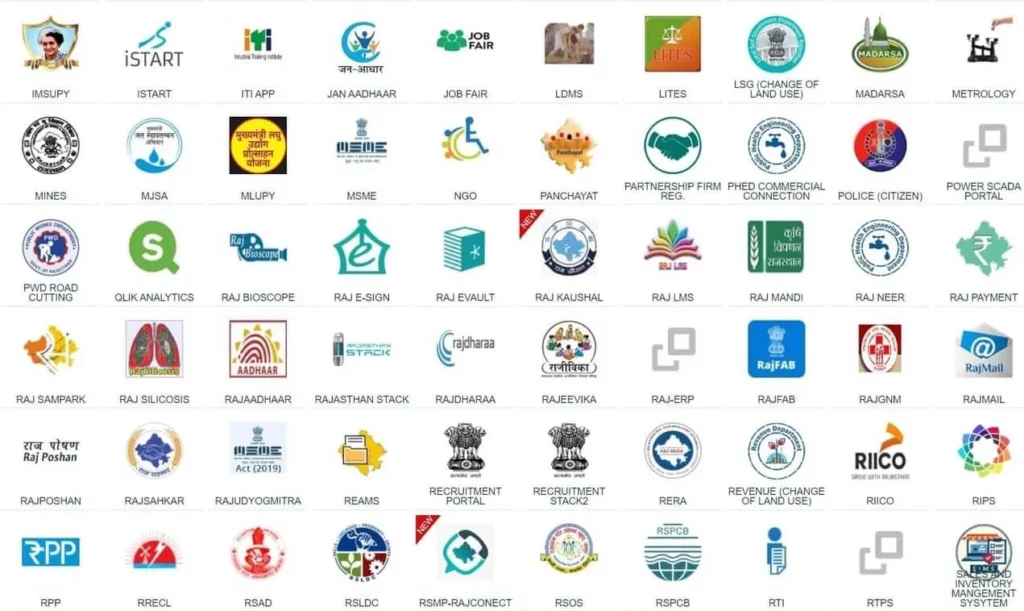
Employment and Recruitment Services
- Rajasthan Staff Selection Board: Access examination forms and results
- Rajasthan Public Service Commission: Apply for government positions
- Employment Exchange Registration: Register for job opportunities
- Recruitment Portal: View and apply for various government vacancies
- Rojgar Mela: Access job fair registrations and updates
Educational Services
- Scholarship Applications: Apply for various state scholarships
- School Admission: Online admission processes for government schools
- Higher Education Portal: University and college-related services
- Examination Results: Access board and university examination results
- Fee Payment: Pay educational institution fees online
Citizen Services (E-Mitra)
- Bill Payments: Electricity, water, and other utility bills
- Certificate Issuance: Birth, death, domicile, and income certificates
- Land Records: Access property and land-related documents
- Ration Card Services: Apply for or update ration card
- Pension Services: Access pension-related information and applications
Business and Commercial Services
- GST Registration: Goods and Services Tax registration and filing
- Business Licenses: Apply for various business permits
- MSME Registration: Micro, Small, and Medium Enterprise registration
- Labor Department Services: Compliance and registration services
- Commercial Tax Services: Tax-related applications and payments
Health Services
- Chiranjeevi Health Insurance: Health scheme registration and claims
- Medical College Applications: Apply for medical education seats
- Health Department Services: Various health-related government services
Agriculture and Rural Services
- Kisan Registration: Farmer registration and subsidy applications
- Agricultural Subsidy: Access farming subsidies and benefits
- Soil Health Card: Apply for soil health testing services
Legal and Documentation Services
- E-Stamp: Purchase electronic stamps for legal documents
- Affidavit Services: Generate and verify affidavits
- Legal Aid: Access legal assistance services
Transportation Services
- Vehicle Registration: Access transport department services
- Driving License: Apply for or renew driving license
- Pollution Certificate: Vehicle emission certificate services